Aristona: A Vintage Serif Font for Handmade Labels & Invitations
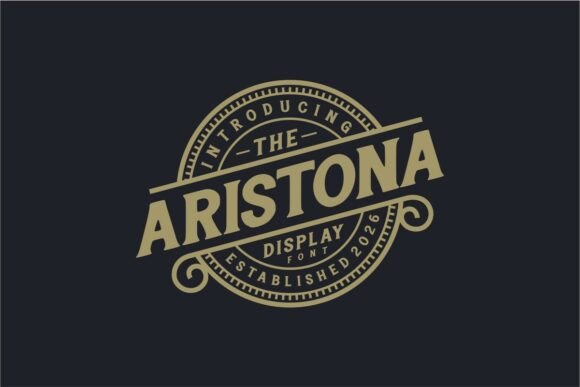
If you’ve ever held a beautifully lettered apothecary jar, admired a hand-painted farmhouse sign, or paused over an invitation with that quiet, confident elegance—then you already know the power of a thoughtful serif font. Aristona is that kind of typeface: a bold vintage display font rooted in classic signage and heritage branding, designed not just to look beautiful but to *work*—on your candle labels, wedding stationery, boutique tags, and printable wall art.
What makes Aristona stand out isn’t just its ornamental details or strong serif structures—it’s how those elements translate into real-world craft use. The elegant curves soften its authority; the subtle flourishes add warmth without sacrificing clarity. It’s not fussy or overly decorative, and it’s never hard to read—even at smaller sizes on product tags or die-cut stickers. As a serif font, it carries tradition and trust, but its confident proportions and balanced spacing keep it feeling fresh and commercially viable.
I use Aristona most often for short, high-impact text: brand names on soap wraps, “Welcome” on wooden welcome boards, “Est. 2023” stamped on linen tea towels, or “Hand-Poured” on soy candle jars. Its sturdy serifs hold up beautifully when cut on Cricut or Silhouette machines—no fragile terminals snapping off, no thin strokes collapsing during vinyl weeding. For small stickers (think 1"–2" round labels), I stick to uppercase or title case with generous letter spacing, and Aristona stays crisp and legible every time.
It shines especially in wedding and event stationery. A “Mr. & Mrs.” monogram in Aristona feels timeless—not trendy, not dated, but *right*. Pair it with a soft script font for names and a clean sans serif for addresses, and you’ve got a trio that balances personality, readability, and polish. I’ve used it for rustic-chic welcome signs, foil-stamped menu cards, and even laser-engraved acrylic place cards—and each time, customers comment on how “thoughtful” and “intentional” the typography feels.
For printable creators, Aristona works beautifully in digital downloads: planner cover pages, quote-based wall art, seasonal SVG bundles (think “Gather ‘Round” for fall or “Joyful Noise” for Christmas), and editable Canva templates. Because it’s a display font—not meant for long paragraphs—I reserve it for titles, headers, and focal phrases. That’s where it earns its keep: commanding attention without shouting.
On physical goods, Aristona adds perceived value instantly. A tote bag with “Good Things Take Time” in Aristona reads like a curated boutique item—not a generic print-on-demand piece. Same goes for mugs, tea towels, and enamel pins: the font’s craftsmanship cues signal care and intentionality to your buyer. That matters, especially when you’re competing in crowded spaces like Etsy or local markets.
Readability across formats is where Aristona proves its practicality. On matte paper stock? Crisp. On kraft tags? Warm and grounded. On glossy sticker sheets? Bold and vibrant. And because it’s built with strong contrast between thick and thin strokes (but not extreme contrast), it avoids the fragility of ultra-thin vintage fonts—making it safer for small-scale cutting and fine-detail printing.
Font pairing is intuitive. Try Aristona with a relaxed handwritten font for contrast in greeting cards or invitations—say, for a “Happy Birthday” headline paired with a personal message in cursive. Or pair it with a warm, humanist sans serif (like Montserrat or Poppins) for packaging copy: Aristona for the product name, the sans for ingredients, weight, or origin story. If you’re building a full brand identity, Aristona can anchor your logo or wordmark while supporting fonts handle body text and web use.
Before downloading, check what’s included: most premium versions of Aristona offer OpenType features like stylistic alternates, ligatures, and swashes—great for adding subtle variation across social media graphics or layered SVG designs. Multilingual support (including extended Latin characters) means you can confidently use it for bilingual wedding invites or international shop branding. File formats typically include OTF and TTF, both fully compatible with design software like Adobe Illustrator, Cricut Design Space, Silhouette Studio, and Canva.
Licensing is essential—and straightforward. Aristona is a commercial font, meaning you’re fully covered to use it in physical products you sell (labels, tags, mugs, apparel), digital downloads (printables, templates, SVG files), and client work (like designing custom invitations for a local wedding planner). Just be sure your license permits commercial use—most reputable sellers clearly state this upfront. No need to credit, no hidden restrictions—just clean, ethical usage rights that support your small business.
Seasonal craft projects are another sweet spot. I’ve used Aristona for holiday market banners (“Handmade with Love”), Easter egg labels (“Farm Fresh”), and summer farmers’ market tags (“Pick Your Own”). Its vintage soul feels authentic without leaning into kitsch—and because it’s not tied to one era or trend, it stays relevant year after year.
Whether you're designing for laser engraving, screen printing, heat transfer vinyl, or inkjet-printed cards, Aristona delivers consistency. It scales well from tiny 8pt product codes (when used sparingly) to 120pt wall quotes—and always retains its character. That versatility is rare in a display serif font, and it’s why I keep Aristona in my go-to folder alongside my most-used design assets.
At its core, Aristona isn’t about nostalgia for nostalgia’s sake. It’s about giving your handmade work the typographic dignity it deserves—without overcomplicating your workflow. It’s a serif font that bridges old-world charm and modern craft sensibility. And when your customers see it on your packaging, your invites, or your shop banner, they don’t just read the words—they feel the care behind them.